The Collection
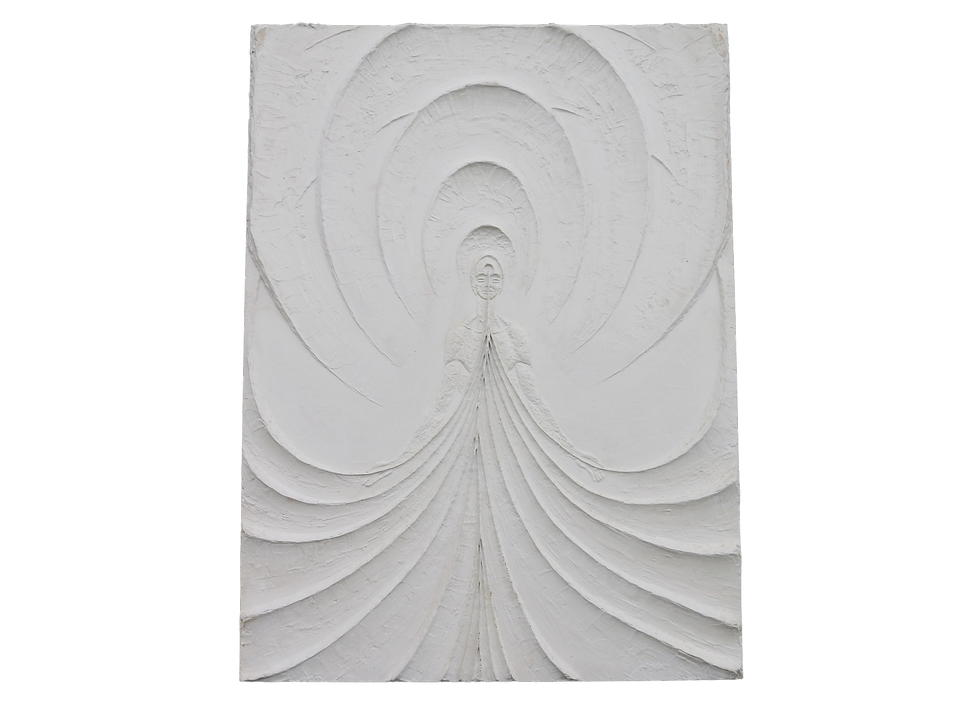
Schoenbrod’s legacy includes over 300 large works, 37 bas-reliefs, hundreds of drawing pieces, 50+ illustrated manuscripts, and two published books. Works were channeled from deep meditative states by the sea in Pacific Grove, California. The family maintains the core collection; select pieces are viewable by appointment or inquiry.
Life, Awakening, and Vision
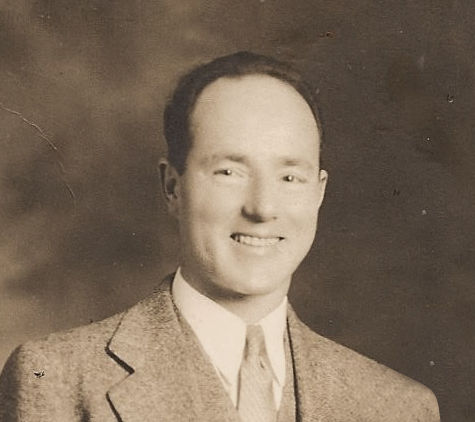
Gilbert Adam Schoenbrod was born on September 3, 1903, in Chicago to parents from Old Russia. His youth was divided between Chicago and Texas before the family moved to New York in 1916. He graduated from Stuyvesant High School and studied biomedicine at New York University while supporting himself through diverse labor: farming in New England, factory assembly lines, locomotive maintenance, and sailing on North Atlantic coal boats and South American freighters. He later pursued sailing as a lifelong hobby.
Schoenbrod entered Columbia University’s College of Physicians and Surgeons but left after realizing his passion lay in health and vitality rather than conventional medicine. He earned his first Master’s degree in painting and sculpture from Yale University, then worked as a commercial illustrator—drawing movie advertisements and designing catalogs for Sears Roebuck & Co.—while beginning a successful career in fine jewelry. He studied lost-wax casting under master Arabian silversmith Yussef Najjar and created custom pieces for Georg Jensen, Saks Fifth Avenue, Lord & Taylor, and other prestigious houses in New York and Boston. During this period, he met and married Florence Symington; they had two sons, David and Jonathan.
At age 40, he returned to Columbia for a second Master’s in education and taught at the university. In 1949, the family relocated to the artist haven of Carmel, California, where he opened Silver Studio in the Court of the Golden Bough. By the mid-1950s, despite material success, arthritis and hypertension prompted a deliberate physical and mental crisis through overwork and fasting. Hospitalized at Agnews State Hospital and receiving electroshock therapy, he experienced a visionary breakthrough during his final treatment: a point of light he interpreted as “the opening into the dimension man has always sought and sometimes calls God.”
Healed and transformed, Schoenbrod closed his commercial studio in 1956 and dedicated the rest of his life to a daily 4:30 a.m. meditative practice. From these sessions emerged a vast body of spiritual art and writings exploring the unity of mind, body, spirit, polarity, nutrition, and the divine in humanity. He adopted a plant-based diet, developed his own supplement (“Adam’s Food”), practiced yoga, meditation, running, fencing, Aikido, and wood-chopping. This regimen resulted in a complete reversal of his health issues. Baptized “Adam” in 1964, he signed many later works accordingly. His style evolved from early photo-realist drypoint etchings (e.g., the 1937 “The Hunter,” a hyper-detailed portrait of a Native American man) to deeply symbolic, spiritually charged works reminiscent of Rembrandt, Blake, and da Vinci.
A quiet man who preferred his “creative chapel by the sea” on Asilomar Boulevard in Pacific Grove, Schoenbrod remained prolific until his passing at age 93 in Monterey, California, in 1996. He is survived by his four granddaughters, great grandchildren and great great grandchildren.

“When the time comes for the work to go out, and if it is to go out, it will go out.”
- Gilbert Adam Schoenbrod
Sacred Core Concepts
THE SEEN EMBODIES THE UNSEEN — EACH GESTURE A SACRED RITE — FORM AS QUIET CONTEMPLATION — UNITING THE EARTHLY AND THE ETHEREAL — GEOMETRY AS HOLY SYMBOLISM — CRAFTER OF THE INNER SELF — SACRED STILLNESS — TRANSCENDING THE MATERIAL — BEYOND BOUNDARIES
Exhibitions
& Recognition

Archival: Smithsonian American Art Museum; auction records for early etchings; private collections.
1967
Triton Museum of Art, San Jose (lecture + exhibition).
1971
One-man show, de Saisset Museum and Gallery, University of Santa Clara; Smithsonian acquires “Weary” and “Reality.”
1973
Adam’s Gallery opening, Carmel-By-The-Sea
1982
Final exhibition, Institute of Noetic Sciences, San Francisco.
